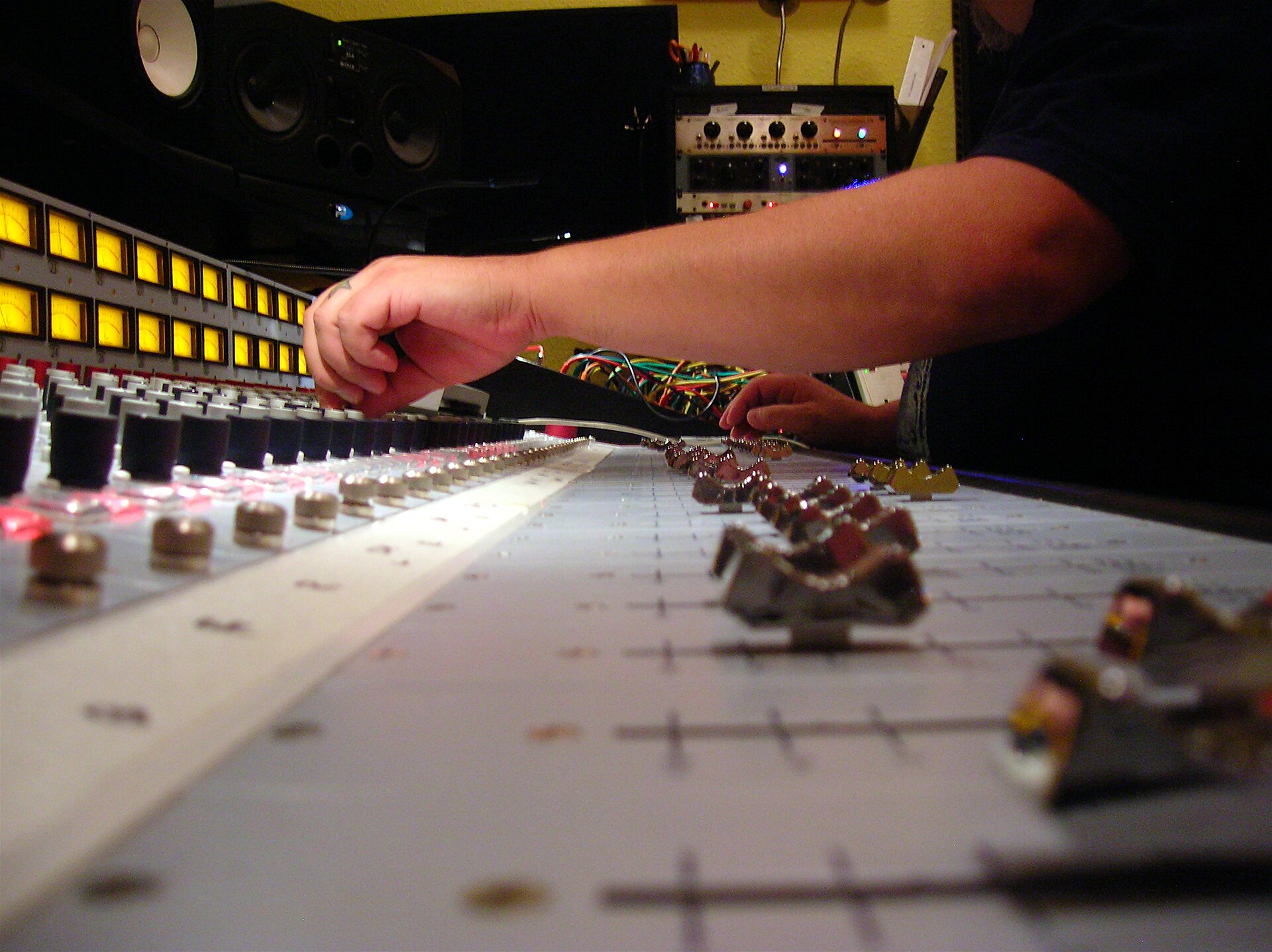
HOLLYWOOD — Almost every footstep you have ever heard in a movie was made by someone standing in a room watching the screen and walking in place. For fifty years, on more films than he could name, that someone was Sonny Vandermeer.
Mr. Vandermeer, a Foley artist who performed and recorded the everyday sounds that films fail to capture on set, died Jan. 7 at his home in the San Fernando Valley. He was 91. His daughter said the cause was heart failure.
The craft takes its name from Jack Foley, a sound man of the early studio era, and it is stranger and more physical than most filmgoers realize. A microphone rarely catches the footsteps, the rustle of a coat, the clink of a glass, so a Foley artist watches the finished picture and performs those sounds live, in sync, on a stage stocked with surfaces and junk. Vandermeer walked across trays of gravel, sand and marble to match an actor’s stride. He snapped a stalk of celery for a breaking bone, wrung a wet chamois for a body pulled from water, and flapped a pair of leather gloves for the wings of a bird nobody had thought to record.
He was known in the trade for his patience and his hoard. His workroom held boxes of shoes in every size, a barrel of coconut shells for hooves, doors of various woods mounted in frames so he could pick the right creak, and a cabinet of what looked like garbage and was, to him, a sound library. He could make a convincing punch, he liked to say, three different ways, and would argue for an afternoon about which one the scene wanted.
“Sonny heard movies the way the rest of us see them,” said Corazon Batiste, a younger Foley artist he trained and who now works stages he once ran. “He’d watch a shot of a man just walking down a hall and tell you the floor was wrong, the shoes were wrong, the man was too angry to walk that soft. Then he’d fix all three with his feet before you finished writing it down.”
Harold Vandermeer, called Sonny since childhood, was born in 1933 and came into the work through a stage-hand job, drifting toward the sound department because, he said, that was where the interesting problems were. He kept at it long past the point when digital libraries of stock effects made his kind of hand-work look, to studios counting costs, like a luxury. He thought the libraries sounded canned, the same door closing in a hundred films, and said as much to anyone who would listen and several who would rather not.
In his later years he taught the craft to a handful of younger artists, insisting they learn to perform a sound before they were allowed to pull one from a hard drive. He wanted them to know, he said, that a footstep is a performance, not a file.
He is survived by a daughter, a son, four grandchildren, and a lifetime of sounds that audiences took for the world itself and never once suspected were a man in a dark room, walking nowhere.