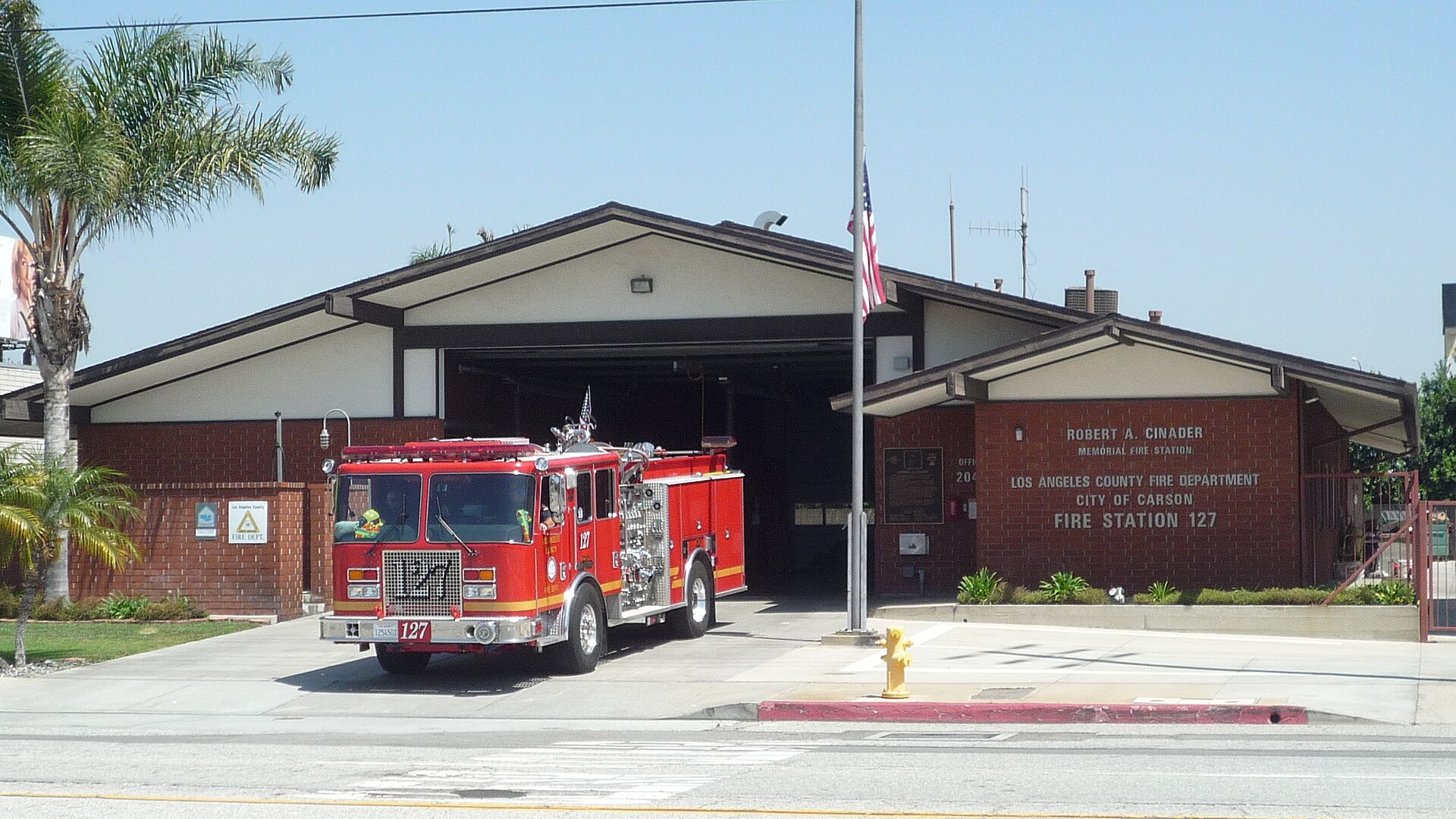
HOLLYWOOD — The collection bins went out in the apparatus bay the week before Thanksgiving, the way they do every year, and by the weekend the first donations had come in: a boxed toy truck, a sack of hats and gloves, a stuffed bear nearly the size of the child who carried it through the door.
The holiday toy and coat drive at the fire station a few blocks off the Boulevard is one of those quiet institutions that predates most of the firefighters running it. Nobody at the house is entirely sure when it started. The photographs on the wall show the same pile of wrapped boxes going back decades, the trucks behind it changing model by model.
“My captain did it, and his captain did it,” said Engineer Marisol Tafoya, who has coordinated the drive for the past four years. “You inherit it. You don’t let it drop on your watch.”
The station takes new, unwrapped toys and warm clothing through the third week of December, then sorts and hands the haul to a nearby elementary school and a family shelter that know which households need them. Last year the drive filled the bay floor. This year, Tafoya said, the early going is slower.
“People give what they can, and a lot of people around here have less to give,” she said. “A man came in last week — works construction, hasn’t had steady work since summer. He put down a coat and apologized that it was only the one. I told him one coat keeps one kid warm. That’s the whole math of it.”
Not every donation arrives in a box. Rosalind Amescua, who has lived around the corner for thirty years, brought a dozen knitted caps she makes through the fall specifically for the drive. “I can’t fix the economy,” she said, setting them in the bin. “I can make hats. A person does the thing they can do.”
The firefighters make up some of the gap themselves. Tafoya said the crew pools money each December to buy for the age ranges that always come up short — usually older kids, the twelve- and thirteen-year-olds who are hard to shop for and easy to overlook.
The station has learned to plan around the neighborhood’s habits. Donations dribble in through late November and early December, then arrive in a rush the last few days before the deadline, when families and businesses remember the drive at the last minute and pull up with trunks full. Tafoya no longer panics at a slow start.
“It always comes in,” she said, looking at the bins with a few days’ worth in them. “Hollywood forgets, and then Hollywood remembers. I’m counting on the remembering.”