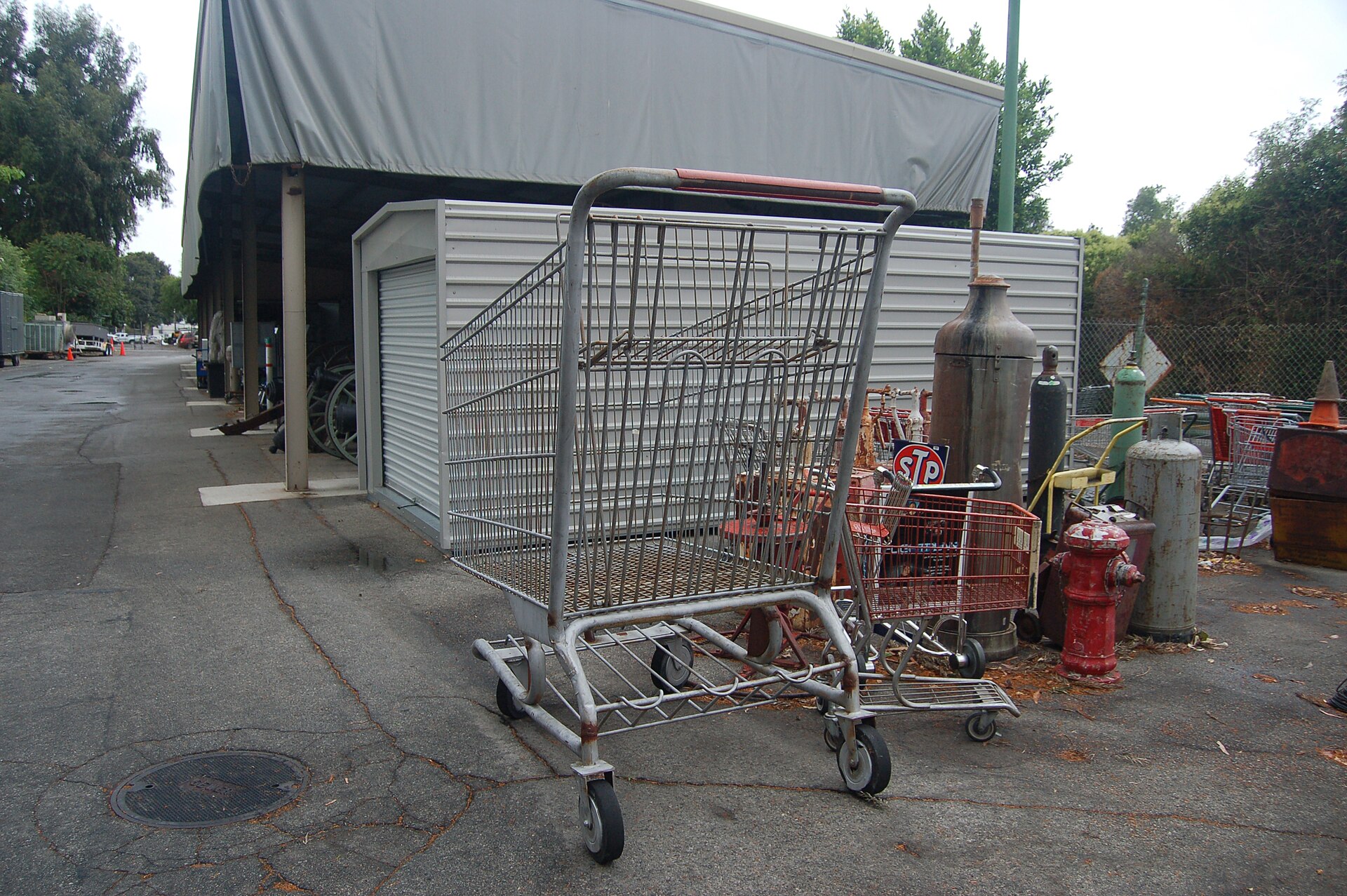
HOLLYWOOD — The aisles of a prop house east of the studios run for what feels like a city block: rows of chandeliers, a wall of vintage telephones, a pallet of hospital gurneys, a corner where several decades of shopping carts wait to be some art director’s idea of exactly right. On a recent morning, most of it was staying put.
“We have the deepest inventory in the city and half the phone calls we had two years ago,” said Lorne Whitcombe, who manages the warehouse and has spent his working life in and around it. “You don’t feel a slump like ours all at once. You feel it as a quiet phone.”
Prop houses occupy a peculiar spot in the machinery of production. They own nothing that appears on a call sheet and everything that appears on screen — the lamp on the detective’s desk, the crate in the warehouse fight, the cart the character pushes through the last shot. When features and series slow, the rentals slow with them, and a business that runs on the constant churn of things going out and coming back feels the stillness quickly.
To keep the doors open, Whitcombe said, the house has leaned hard on the work that has held up better than film: commercials, which still need a well-dressed set for thirty seconds, and streaming productions, which rent in smaller, faster batches than the big features once did. The margins are thinner and the turnarounds shorter. It is, he said, a living, if not the one the warehouse was built for.
The harder problem is not this month’s revenue. It is the collection itself. A prop house is only worth renting if it has the strange, specific object a designer needs on short notice, and that depth took decades and a great deal of money to assemble. Selling pieces to cover a slow quarter is easy and, Whitcombe said, a trap.
“The temptation, when it’s tight, is to thin the shelves — auction off the slow movers, raise a little cash,” he said. “Then the work comes back, a designer asks for the one thing you sold, and you’ve become a warehouse that can’t say yes. I’ve watched houses do it. I’d rather eat the storage.”
For the people who work the floor, the slowdown has meant fewer hours and a different rhythm. Constance Ijeoma, who has pulled and restocked orders at the house for eleven years, said the crew now spends quieter days repairing and cataloguing — mending gilt frames, re-wiring lamps, photographing shelves that used to empty too fast to document.
“When it’s busy you’re just running,” she said. “When it’s slow you actually fix the thing that’s been broken for three years. I’d trade the calm for the chaos, don’t get me wrong. But the collection’s in better shape than it’s been in a while.”
Whitcombe expects the work to return; it always has, in his experience, though never on a schedule anyone could bank on. Until it does, he keeps the aisles stocked, the lamps working and the gurneys dusted, so that when a designer finally calls needing something impossible, the answer is still yes.